| PRINT | |
| Friday, 05 June 2009 | |
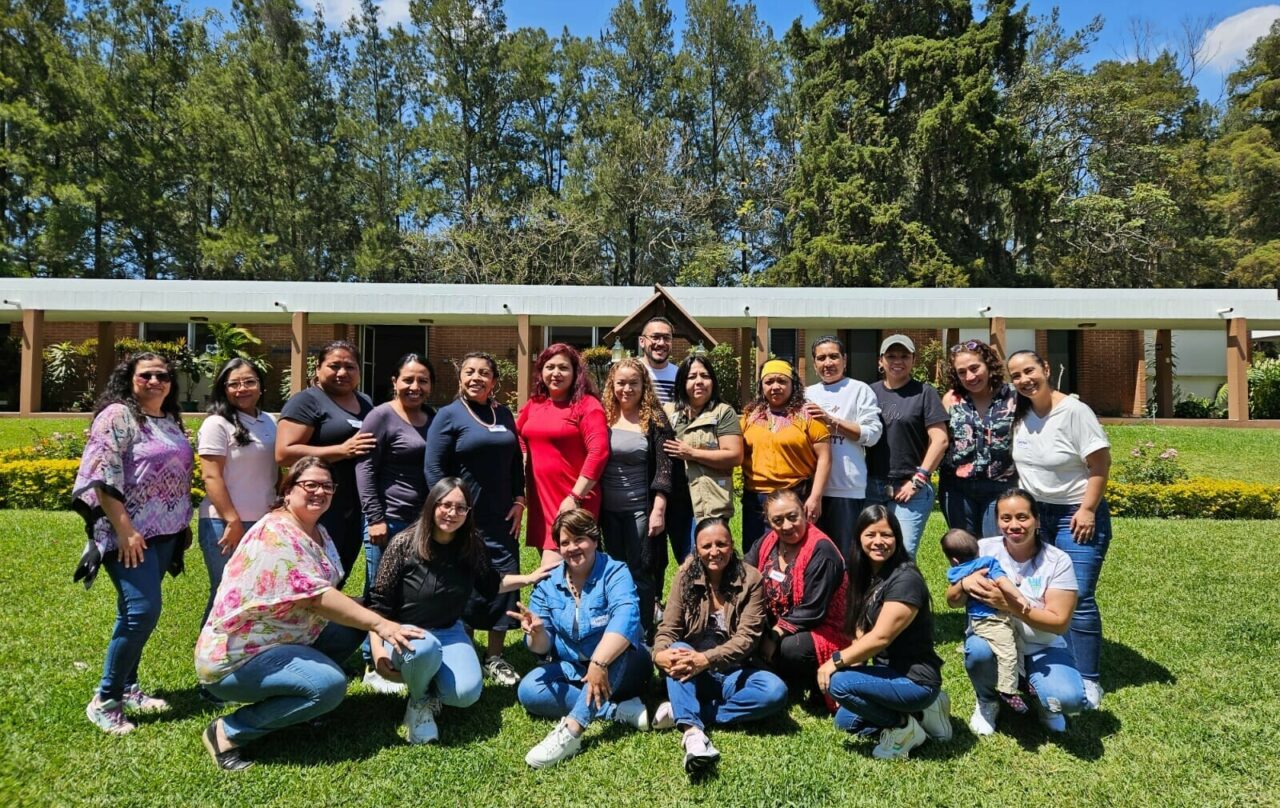
Ground-Breaking Anti-Trafficking Legislation Introduced in CongressOn Friday, June 5, Representatives Chris Smith (R-NJ) and Carolyn Maloney (D-NY) introduced new legislation designed to increase U.S. support to eradicate child trafficking in countries that have the will to end the crime but lack resources. “The Child Protection Compact Act of 2009” will provide assistance to select “focus countries” through the U.S. Department of State’s Office to Monitor and Combat Trafficking in Persons (G/TIP); focus countries will receive support in building public justice systems that investigate crimes against children and prosecute perpetrators in numbers sufficient to deter and eventually eliminate the crime. The legislation also authorizes increased assistance for care for survivors of trafficking.Q & A on the Child Protection Compact Act with IJM Vice President for Government Relations Holly Burkhalter![]() IJM supporters Troy Groves, recording artist Sara Groves and author Susie Larson meet with their Representative’s legislative staff to express their support for the CPCA. HB: The Child Protection Compact Act is the work of Rep. Chris Smith (R-NJ) and Rep. Carolyn Maloney (D-NY). The very fact that this conservative Republican and liberal Democrat have teamed up says something good about the bill and the issue it addresses. Protecting children from trafficking and exploitation is something that Members of Congress across the political spectrum agree on and have worked on collaboratively for many years. I am sure that there are many things that Representatives Chris Smith and Carolyn Maloney disagree on. But on the issue of the U.S. providing increased foreign assistance in innovative new ways to countries burdened with child slavery, the two are of one mind. This legislation, if passed, would authorize an additional $50 million over three years to the State Department’s Office to Monitor and Combat Trafficking in Persons for the purpose of eradicating the trafficking in children in a few focus countries. The new legislation uses the model of a “compact,” which has been used in other pilot foreign aid programs. The compact is basically a Memorandum of Understanding between the donor country (the U.S.) and the eligible beneficiary country. The purpose is to identify actual targets, strategies, and goals so that the funds are used well and progress can be measured. Q: How has International Justice Mission been involved in the creation of this legislation? This legislation, if passed, would authorize an additional $50 million over three years to the State Department’s Office to Monitor and Combat Trafficking in Persons for the purpose of eradicating the trafficking in children in a few focus countries.HB: IJM has a special reason to be grateful for the introduction of this bill. The central feature of the legislation, which is to provide increased assistance for select “focus countries” to nourish functioning justice systems to protect children from trafficking, was informed by IJM’s own experience in aiding foreign governments in combating trafficking. I talked to Congressional staff about IJM’s work in combating child trafficking in the Philippines and Cambodia, and explained how IJM undercover agents helped local authorities locate minor girls in prostitution and bring them to safety. I described our comprehensive police training program for anti-trafficking forces in both countries, and best of all, was able to tell them the good news that IJM’s investment in both countries was starting to pay off not just in the number of children we helped remove from prostitution and traffickers we helped convict, but in strong indications of an overall decline in the numbers of children being victimized. IJM has a special reason to be grateful for the introduction of this bill. The central feature of the legislation, which is to provide increased assistance for select “focus countries” to nourish functioning justice systems to protect children from trafficking, was informed by IJM’s own experience in aiding foreign governments in combating trafficking.We think IJM’s experience in these places, where availability of minor children in prostitution declined dramatically after increased law enforcement, is something that the U.S. Government will want to replicate elsewhere. Q: How have IJM supporters been a part of this exciting development? HB: IJM is so thankful for our friends around the United States that have contacted their Representatives and Senators by postcard, in person, on the phone, and through the media, to express their support for this exciting new initiative. On March 30, 2009, we hosted over 100 advocates from twenty-five states who attended more than 115 meetings with Members of Congress (Read more about these advocacy efforts). Clearly, their efforts are starting to pay off, and we’ll be asking for their help again to see this legislation through to the finish line.
|